Posts

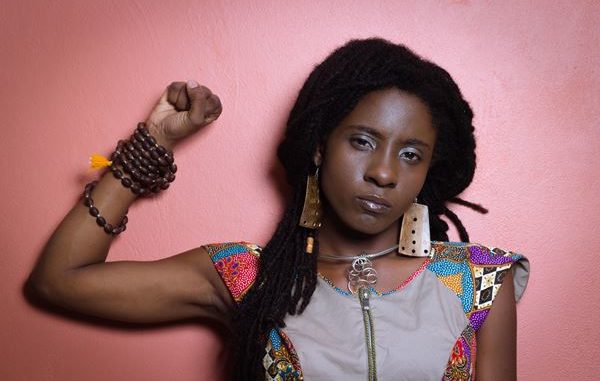
Black History Contemporary Icons

Reggae Hour Podcast on B.O.S.S. Radio

Reggae Hour Podcast on B.O.S.S. Radio
Subscribe Today!!!

Reggae-Hour

🌿 The Roots Revival: How Reggae Reclaimed Its Voice in 2025–2026

Image
🌿 The Roots Revival: How Reggae Reclaimed Its Voice in 2025–2026 For years, people said reggae had lost its place in global music. Streaming algorithms shifted attention toward faster sounds. Dancehall evolved into new forms. Afrobeats, amapiano, trap, and pop fusion dominated playlists worldwide. To some listeners, roots reggae began to feel like memory instead of movement. But between 2025 and 2026, something changed. Not quietly. Not nostalgically. A new wave of artists, projects, and live performances reminded the world that reggae was never meant to disappear — because reggae was never just music. It was message. It was identity. It was resistance. And the Roots Revival movement entered a powerful new chapter. 🔥 The Second Wave of the Revival The original Roots Revival movement emerged in the early 2010s through artists like Chronixx, Protoje, Kabaka Pyramid, and Jah9. At the time, reggae was searching for balance. Dancehall had become dominant commercially, while roots reggae s...

Stepping Razor: Why Peter Tosh Was Too Dangerous to Be Heard

Image
His message was challenged.   THE QUESTION MOST PEOPLE AVOID Bob Marley is everywhere. His music plays in cafés, documentaries, playlists, and playlists within playlists. He is celebrated as the global face of reggae—peaceful, unifying, timeless. But Peter Tosh ? He is remembered differently. Respected—but not always embraced. Celebrated—but often misunderstood. Powerful—but still… controversial. Same origins. Same struggle. Same foundation. So why did one become universal… while the other remained uncomfortable? To answer that, you have to understand one thing: Peter Tosh was not trying to be accepted. He was trying to be understood. And those are not the same thing. ⚔️ THE STEPPING RAZOR — A MAN WHO REFUSED TO BLUNT HIS EDGE The term Stepping Razor wasn’t just a song title. It was a declaration. A stepping razor is not something you hold casually. It is sharp. Dangerous. Direct. That is who Peter Tosh was. Where others translated reggae into something globally digestible, Tosh ...

Reality Roots: The Pain, Survival, and Brotherhood Behind Spliff Vision

Image
Some bands are formed in garages. Some are built in studios. Spliff Vision was forged in survival. From the working-class streets of San Pedro’s “The Lows,” the brothers and cousins who make up Spliff Vision didn’t just grow up around music—they grew up around the realities that reggae was always meant to speak about: struggle, loss, injustice, and resilience. Their sound—what they call Reality Roots—isn’t branding. It’s biography. --- A Childhood Where Music Was the Escape Before the stages, before the festivals, before the crowds knew their name, the members of Spliff Vision were simply family in a house full of instruments. Konker Spliff grew up alongside his brothers—Buddy on drums and their older brother on bass—learning music by ear, experimenting, and copying everything they heard. No formal training. No classes. Just passion. They were self-taught players, united by the same instinct: if there was an instrument nearby, they wanted to play it. But the music wasn’t just entertain...

Billy Mystic & Leroy “Lion” Edwards Move Forward — Not Away

Image
Reggae history is not a closed book. It is being written — even now. In late 2025, roots reggae fans received unexpected news: After more than four decades at the foundation of the Mystic Revealers, founding vocalist Billy Mystic (Billy Wilmot) and bassist Leroy “Lion” Edwards announced their departure from the band’s long-standing structure. Reports cite stress and financial strain. But if you understand Billy Mystic’s journey… this moment feels less like rupture — and more like alignment. --- From Bull Bay to Self-Determination When the Mystic Revealers formed in Bull Bay in the late 1970s, they were outsiders to reggae’s traditional corridors of power. They did not wait to be invited in. They recorded themselves. Pressed their own records. Carried their message into the streets. It was that same independence that eventually drew the attention of Jimmy Cliff, who helped legitimize “Mash Down Apartheid” — a record that supported the African National Congress and positioned the group ...

Bob Marley at 81: The Bullets, the Peace, and the Sacrifice That Changed the World

Image
At 81 years since his birth, Bob Marley is no longer just a musician remembered by playlists and posters. He is a historical force—one whose life reads less like a biography and more like a reckoning. Behind the slogans of “One Love” and “Peace” lies a far more complex truth: Bob Marley lived through violence, carried political power without office, and ultimately chose his message over his own survival. This is the story we don’t tell often enough. The Man Who Wasn’t Stopped by Bullets On December 3, 1976, gunmen stormed Marley’s home in Kingston, Jamaica. He was shot twice—once in the arm and once near the chest. Doctors advised rest. Friends begged him to cancel his upcoming performance. Two days later, Marley walked on stage at the Smile Jamaica Concert anyway. When asked why, his answer became legend: “The people who are trying to make this world worse aren’t taking a day off. How can I?” That moment redefined courage—not as fearlessness, but as responsibility. Marley unde...

Seth Caro on Music, Thinking for Yourself, and Why the Journey Is the Message- Interview

Image
 Seth Caro on Music, Thinking for Yourself, and Why the Journey Is the Message On February 10th, 2026, at 7:00 p.m. Central Standard Time (5:00 p.m. Pacific), Reggae Hour hosted a long-form conversation with Seth Caro of Venice Beach Dub Club—a discussion that moved well beyond genre labels, releases, or promotion. What unfolded was a reasoning-driven dialogue about music as communication, humility as a creative discipline, and why real growth can’t come from chasing scenes, slogans, or surface-level narratives. Seth explains that music, for him, has always been a way to communicate complicated ideas—ideas that are difficult to express directly in everyday conversation. Rather than telling people what to think, he prefers to let listeners discover meaning on their own. That process, he says, is what creates a genuine and lasting connection between artist and audience. The conversation traces his early exposure to hip hop in New York, his first encounters with dancehall on the radio...

Tasha T Named Reggae Hour's Black Woman of Black History Month 2026

Image
 Faith, Education, and the Living Mission of Reggae Black History Month is not only a time to honor ancestors whose names shaped the past. It is also a time to recognize living Black history—women and men whose daily work strengthens culture, uplifts community, and prepares the next generation to stand taller than the last. In 2026, Reggae Hour proudly names Tasha T as the Black Woman of Black History Month, honoring a life of service that extends far beyond the stage. She is not only a reggae artist. She is an educator, a literacy advocate, a cultural bridge-builder, and a woman who has turned faith into action for more than a decade. This recognition is not symbolic. It is earned. More Than Music: A Life Anchored in Purpose Reggae has always been more than sound. At its core, it is instruction, resistance, healing, and truth carried on rhythm. Tasha T embodies this original mission of reggae—not as a concept, but as a lived practice. Her music carries messages of perseverance, gr...

Reggae Hour Video Interviews